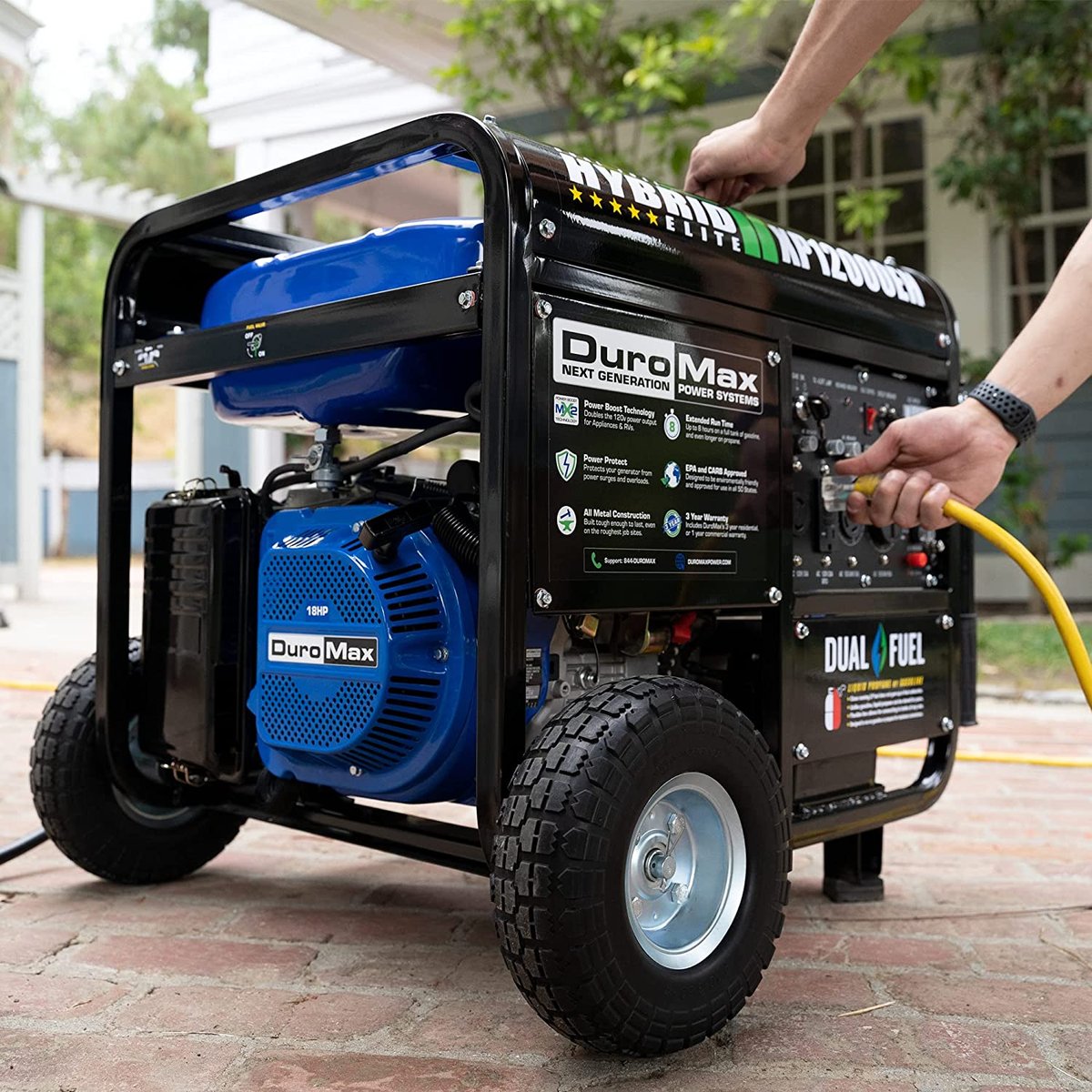
Imagine a power outage, a remote campsite, or a bustling tailgate party. The last thing you want is the deafening roar of a traditional generator, not to mention the worry of frying your sensitive electronics. That's where inverter generators shine. They’re the quiet, fuel-efficient, and surprisingly powerful workhorses that deliver a clean, stable energy source, making them the best inverter generators (by use case) for nearly any situation.
Gone are the days of choosing between reliable power and peace and quiet. Inverter generators have revolutionized portable power, offering a sophisticated solution for everything from keeping your home's critical appliances running to powering a coffee maker in the wilderness. But with so many options available, how do you pick the right one? This guide cuts through the noise, helping you understand what makes an inverter generator tick and matching you with the perfect model for your unique needs.
At a Glance: Why Inverter Generators Lead the Pack
- Whisper-Quiet Operation: Significantly quieter than conventional generators, perfect for neighbors, campgrounds, and conversation.
- Fuel-Efficient: Often run longer on less fuel, saving you money and trips to the gas station.
- Clean Power Output: Produces stable, "clean" electricity, crucial for sensitive electronics like laptops, smartphones, and medical devices.
- Compact & Portable: Generally smaller and lighter, making them easier to transport and store.
- Versatile: Ideal for home backup, camping, tailgating, RVs, and even sensitive job site tools.
- Essential Safety: Modern inverter generators include Carbon Monoxide (CO) safety shutoff technology for your protection.
The Inverter Advantage: More Than Just Quiet
So, what exactly is an inverter generator, and why has it become the go-to for so many? Unlike conventional generators that produce raw AC power directly from the engine, inverter generators convert AC power to DC, then "invert" it back to AC. This multi-step process results in a much cleaner, more stable sine wave of electricity. Think of it like a perfectly smooth, consistent flow of water, rather than a choppy, fluctuating stream.
This "clean power" is vital for modern sensitive electronics. As Paolo Fu, who leads Consumer Reports' generator testing, notes, inverter generators are significantly quieter. This quiet operation, combined with their fuel efficiency and compact design, makes them incredibly versatile. While they typically come with a higher price tag than their conventional counterparts, the benefits often far outweigh the cost for users who value peace, efficiency, and equipment protection.
Safety First, Always: Guarding Against Carbon Monoxide
Before we dive into specific models and use cases, let's talk about the absolute most critical aspect of generator ownership: safety. Every recommended inverter generator you'll find today includes Carbon Monoxide (CO) safety technology. This life-saving feature is designed to automatically shut off the engine if CO levels in an enclosed space reach unsafe levels.
However, technology is a safeguard, not a replacement for vigilance. Carbon monoxide is an odorless, colorless, and deadly gas. You must always operate gasoline or propane-powered generators outdoors. Place your generator at least 20 feet from any dwelling, including garages, and ensure the exhaust is directed away from windows or doors. This simple step is paramount to preventing CO poisoning. Remember, a portable generator is for outdoor use only.
Decoding Generator Power: Watts, Volts, and Sizes Explained
Choosing the right inverter generator starts with understanding power. Generators are measured by their wattage output, which indicates how much electricity they can provide.
The Wattage Equation: Running vs. Starting Power
- Running Wattage: This is the continuous power an appliance needs to operate. Add up the running watts of all the devices you plan to power simultaneously.
- Starting Wattage (or Surge Wattage): Many appliances, especially those with motors (like refrigerators, air conditioners, or power tools), require a temporary burst of extra power to start up. This "starting wattage" can be 2-3 times higher than their running wattage. Your generator needs to be able to handle these brief surges.
Pro Tip: It’s always smart to purchase a generator with about 20% more capacity than your calculated total running and starting wattage needs. This provides a buffer and prevents overloading.
Voltage Requirements: 120V vs. 240V
- 120-volt Appliances: Most common household items like refrigerators, lights, TVs, and small electronics run on 120 volts.
- 240-volt Appliances: Larger appliances such as electric dryers, central air conditioning units, and well pumps often require 240 volts. If you plan to power these, you'll need a generator with at least a 30-amp/240-volt output and likely a transfer switch professionally installed to connect it to your home's electrical panel.
Inverter Generator Size Categories
Inverter generators, like their conventional counterparts, are categorized by their power output:
- Mini (Less than 1,500 watts): Ideal for basic camping, tailgating, or powering a few small electronics during an outage.
- Small (1,500 to 2,500 watts): Suitable for several devices during an outage, or providing comfortable power for camping and tailgating. Compact and highly portable.
- Midsized (2,500 to 5,000 watts): Capable of powering an array of appliances like refrigerators, lights, and some tools. These typically lack a 220-volt connection for hardwired equipment.
- Large (5,000+ watts, often 220-volt capable): Powerful enough for most home appliances and can handle hardwired devices (e.g., well pumps, water heaters) when connected via a transfer switch.
Finding Your Perfect Match: Best Inverter Generators by Use Case
Now, let's explore specific scenarios and the inverter generators that rise to the occasion.
For Home Backup: Powering Essentials During Outages
When the power goes out, an inverter generator can be a lifesaver, keeping your refrigerator humming, lights on, and essential devices charged. For home backup, you'll want sufficient wattage, fuel efficiency for extended run times, and reliable performance. Consumer Reports' tests highlight that while most perform well, some models might not deliver promised power under demanding conditions, so choosing trusted brands is key.
- For Critical Circuits & Essential Appliances (Midsized to Large Inverter):
You need enough power for your refrigerator, some lights, a microwave, and charging devices. If you have a well pump or a window AC unit, you'll need a higher capacity. - Our Pick: Pulsar 7,250-Watt Dual-Fuel Inverter Generator
This model offers clean power (claimed THD <3% and stable frequency) at a great value. Its dual-fuel capability (gasoline and propane) provides flexibility, which is invaluable during an extended outage when one fuel type might be scarce. Easy to assemble and prep, it's a fantastic option for powering multiple essential 120-volt circuits. - Our Pick: Harbor Freight Predator 9,500 Large Inverter Generator
This is a workhorse capable of powering critical circuits in modest homes. Despite its significant output, it's notably quiet for its class. Equipped with four wheels and a fold-out handle, it offers surprising portability for a large unit, though you might still need an extra hand to maneuver it. It also comes with various plug ends for broad compatibility. - Our Pick: DuroMax XP11000iH Powerful Mid-Size Dual-Fuel Inverter Generator
With an 11,000-watt running capacity, the DuroMax XP11000iH blurs the line between a robust portable and a serious home backup solution. It’s parallel-capable, meaning you could link two for even more power if needed. Enclosed for durability and superior sound dampening (a quiet 61 dB at 20% load), it offers remote start, an integrated battery tender, and an onboard display. While it weighs over 200 pounds, wheels and handles make it manageable. This generator is ideal if you need to power more than just essentials, possibly including some 240-volt appliances via a transfer switch, offering a strong contender for those who Explore top rated inverter generators for serious home backup.
For Camping & Tailgating: Quiet Power on the Go
The beauty of an inverter generator for outdoor recreation lies in its quiet operation and portability. You want to power lights, charge phones, run a small fridge, or even a projector without disturbing fellow campers or tailgaters.
- For Basic Needs (Mini to Small Inverter):
Look for models in the 1,000 to 2,500-watt range. These are typically the lightest and quietest, designed for minimal fuss. - What to Look For:
- Weight: Easily lifted by one person (under 50-60 lbs).
- Noise Level: As low as possible, preferably under 60 dB.
- Run Time: Good run time on a small tank, often 6+ hours at quarter load.
- Outlets: Standard 120V AC outlets and USB ports for charging devices.
- While specific models aren't provided in the source for this exact wattage range for camping, brands like Honda and Ryobi are known for excellent compact inverter generators that fit these criteria, often offering models in the 1000-2200 watt range perfect for these scenarios.
For RV & Travel Trailer Adventures: Powering Your Mobile Home
RVs have unique power demands. You might need to run an air conditioner, microwave, television, and recharge batteries. The generator needs to be quiet enough for RV park rules (often under 65 dB) and have appropriate outlets.
- For Mid-Size RVs & Campers (Midsized Inverter):
A generator in the 3,000 to 4,500-watt range is often perfect, especially if it has a dedicated 30-amp, 120-volt receptacle. - Our Pick: Pulsar 7,250-Watt Dual-Fuel Inverter Generator
While robust, the Pulsar's clean power output makes it suitable for RVs with sensitive electronics. Its dual-fuel option is excellent for flexibility on the road, allowing you to use propane if gasoline isn't readily available or if you prefer its cleaner burn. Its quiet operation would also be a major plus in many RV parks. - Consideration for Larger RVs / Dual ACs (Large Inverter):
For larger RVs with multiple air conditioners or heavy power demands, a larger inverter generator like the DuroMax XP11000iH would be a strong contender. Its high wattage and quiet operation (61 dB at 20% load) can handle significant loads, though its weight might be a factor for some RV setups.
For Job Sites & DIY Projects: Reliable Power for Tools
Power tools often have high starting wattages, and some sensitive electronics on a job site (like laptops for diagnostics or charging battery packs) require clean power. Inverter generators offer the best of both worlds: rugged power and clean output.
- For Heavy-Duty Tools & Mixed Loads (Large Inverter):
You’ll need a robust inverter generator that can handle the surge demands of saws, drills, and compressors, while also providing stable power for charging batteries or running more delicate equipment. - Our Pick: DuroMax XP11000iH Powerful Mid-Size Dual-Fuel Inverter Generator
Its 11,000 running watts and parallel capability make it a powerhouse for job sites. The enclosed design protects it from the elements, and its relatively quiet operation means less distraction for workers. The ability to run on propane is also a benefit for job sites where gasoline might be inconvenient or restricted. - Our Pick: Harbor Freight Predator 9,500 Large Inverter Generator
Another excellent choice for job sites. Its 9,500 running watts can easily power a range of heavy-duty tools, and its various plug options offer versatility for different equipment. The built-in wheels and handle, while requiring two people to lift, make site-to-site movement much easier than traditional, heavy generators.
Beyond Portable: A Quick Look at Other Generator Types
While this guide focuses on inverter generators, it's helpful to understand their place in the broader world of power generation.
- Standard Fuel (Portable) Generators: These are often less expensive than inverters, offer high wattage, but are typically louder and produce "dirtier" power less suitable for sensitive electronics.
- Power Stations ("Solar Generators"): These are essentially large battery banks that store energy, often charged via solar panels or an AC outlet. They are silent and can be used indoors (no CO risk!), but their run time is limited by battery capacity and recharging can be slow. They don't generate power in real-time but rather store it.
- Standby Generators: Permanently installed units that automatically kick on when grid power fails, providing whole-home backup. They are the most expensive option, require professional installation, and typically range from 10,000 to 25,000 watts. Examples include Generac's 22-kilowatt model (for 2,500 sq ft homes) or a 13,000-watt model for smaller homes, both offering automatic activation and WiFi monitoring. These are a different class altogether, designed for ultimate convenience and reliability for comprehensive home power.
Making Your Choice: A Step-by-Step Generator Selection Guide
Ready to pick your inverter generator? Follow these steps to ensure you get the right fit:
- Calculate Your Energy Needs Meticulously:
- List all the appliances and devices you want to power.
- Find their running wattage and starting wattage (often on a label or in the manual).
- Add up the running wattages for everything you'll run simultaneously.
- Identify the single appliance with the highest starting wattage.
- Your generator's running wattage needs to exceed your total running wattage.
- Your generator's peak/starting wattage needs to exceed your highest starting wattage, plus the running watts of all other simultaneously active devices.
- Rule of Thumb: Purchase a generator with 20% more capacity than your calculated need.
- Wattage Estimates:
- 3,000-5,000 watts: Fridge, lights, a few modest appliances.
- 6,000-8,000 watts: Heat (via furnace fan), hot water (via pump), several appliances.
- 10,000+ watts: Adding large appliances like laundry machines and dishwashers, or powering most of a mid-size home.
- Identify Voltage Requirements (120V or 240V):
- Most camping, tailgating, and basic home backup needs will be 120-volt.
- If you require 240-volt power for well pumps, electric dryers, or central AC, ensure your chosen large inverter generator has a 30-amp or 50-amp 240-volt output and plan for a transfer switch installation by a licensed electrician.
- Consider Fuel Type and Runtime:
- Gasoline: Most common, but can degrade over time.
- Propane: Cleaner burning, longer shelf life, often preferred for emergencies.
- Dual-Fuel (Gasoline & Propane): Offers incredible flexibility, especially during extended outages when one fuel might be hard to find. Models like the DuroMax XP11000iH and Pulsar 7,250-Watt offer this versatility.
- Runtime: How long will it run on a tank of fuel at a typical load? Longer run times mean less frequent refueling.
- Evaluate Portability and Noise Level:
- Portability: For camping or tailgating, lighter units (under 60 lbs) are key. For larger home backup or job site generators, wheels and handles are essential.
- Noise Level: Measured in decibels (dB). Inverter generators range from the mid-50s to low 70s dB. For reference, normal conversation is about 60 dB. Lower is always better for comfort and compliance with campground rules.
- Factor in Budget and Features:
- Inverter generators generally range from around $250 for mini models to over $2,000 for powerful units.
- Key Features to Look For:
- CO Shutoff: A non-negotiable safety feature (standard on new models).
- Low-Oil Shutoff: Protects the engine from damage.
- Electric Start/Remote Start: Adds convenience.
- Fuel Gauge/Digital Display: Helps monitor fuel levels and performance.
- Parallel Capability: Allows you to link two smaller inverters for combined power.
- Warranty: Indicates manufacturer confidence.
Generator Longevity and Maintenance
Consumer-grade portable generators can last anywhere from 1,000 to 3,000+ hours of operation. If you use yours for about 100 hours per year (seasonal camping, occasional outages), that translates to 10-30 years of service. Proper maintenance, including regular oil changes, fuel stabilization (especially for gasoline), and proper storage, will significantly extend its lifespan.
Safety Recap: Crucial Reminders for Operating Your Inverter Generator
We can't stress this enough: safety is paramount.
- Carbon Monoxide Kills: NEVER run any fuel-based generator indoors or in an attached garage. Position it outdoors, at least 20 feet from your home, with the exhaust directed away from doors, windows, and vents.
- Prevent Overload: Pay attention to signs like dimming lights, appliances shutting off, or the generator sounding louder or strained. Immediately unplug non-essential items or turn off the generator for 10+ minutes. Prolonged overload causes overheating, damage, and fire risk.
- Refueling Safety: Always turn off a gasoline or propane generator and allow it to cool before refueling. Spilled fuel on a hot engine is a fire hazard. Power stations, being battery-based, can often charge while in use, but fuel-based units cannot.
- Local Regulations: Check your state, local, and HOA regulations regarding generator use and placement. Incorrect setup can lead to fines or, more importantly, dangerous situations.
The Final Word: Powering Your Life, Smartly and Safely
Choosing the best inverter generator by use case isn't just about raw power; it's about smart, safe, and efficient power tailored to your lifestyle. Whether you're safeguarding your home against an outage with a robust dual-fuel unit, enjoying a quiet evening at the campsite, or powering tools on a remote job, there's an inverter generator designed for you. Invest in the right model, prioritize safety, and enjoy the peace of mind that comes with reliable, clean power.