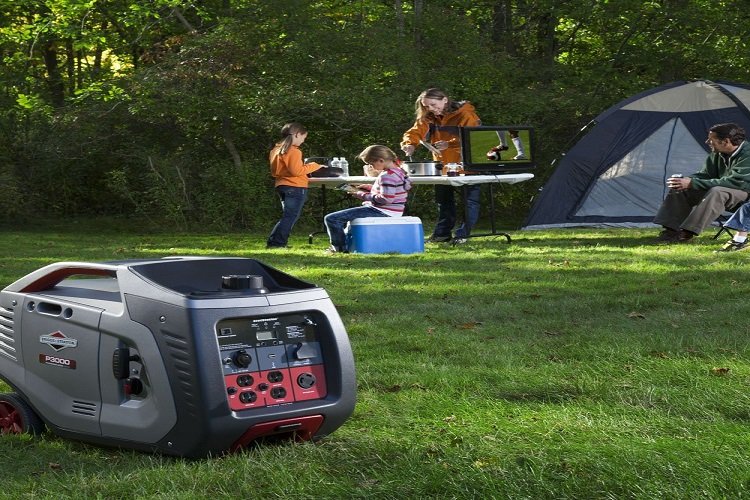
Tired of rumbling, fuel-guzzling generators that sound like a lawnmower stuck in overdrive? If you're looking to power your next camping trip, keep your essentials running during an outage, or even supply tools on a remote job site without the headache, then understanding the Top Brands and Reviews of Inverter Generators is your crucial first step. These modern powerhouses have reshaped what we expect from portable power, offering a quieter, more efficient, and ultimately, more pleasant experience.
At a Glance: Why Inverter Generators Matter
- Whisper-Quiet Operation: Significantly quieter than traditional generators, making them ideal for camping, tailgating, and residential use.
- Fuel Efficiency: They adjust engine speed to match power demand, using less fuel and extending run times.
- Clean Power Output: Produce stable, "clean" electricity, safe for sensitive electronics like laptops, smartphones, and medical devices.
- Compact & Portable: Generally lighter and smaller, often designed for easy transport.
- Higher Upfront Cost: Expect to pay more than for a conventional generator, but the long-term benefits often outweigh the initial investment.
The Quiet Revolution: What Makes Inverter Generators So Special?
Imagine the peace of a serene campsite or the ability to converse normally during a power outage, even with your generator humming nearby. This isn't a pipe dream; it's the reality with inverter generators. Unlike their traditional counterparts, which operate at a constant, noisy engine speed regardless of the power load, inverter generators utilize advanced technology to produce usable power on demand.
At its core, an inverter generator works by converting the raw, high-frequency AC power generated by its engine into DC power, and then "inverting" it back into stable AC power. This two-stage process, managed by a computer-controlled inverter, allows the engine to rev up or down based on your actual power needs. The result? Less fuel burned, less noise generated, and a more consistent, "cleaner" electrical current that's safer for your sensitive electronics.
Paolo Fu, who leads generator testing at Consumer Reports (CR), champions inverter generators over conventional portable models if cost isn't a barrier. His reasoning is simple and compelling: their significantly quieter operation is a game-changer. For anyone who's ever endured the cacophony of a conventional generator, the benefits of quiet operation are immediately apparent.
Why Trust Our Insights? Our Methodology & Expertise
When investing in a crucial piece of equipment like an inverter generator, you need trustworthy information. Our insights are built on rigorous testing methodologies from respected authorities like Consumer Reports and Bob Vila, combined with real-world understanding. We delve beyond manufacturer claims to understand true performance.
Consumer Reports' Approach: Pushing Limits with Real-World Loads
CR engineers don't just plug in a single device; they challenge generators with real household loads. This means hooking up key appliances like space heaters, refrigerators, and window air conditioners to see how well a generator performs under pressure. They meticulously evaluate:
- Handling Sudden Spikes: Can the generator gracefully manage the jolt when a refrigerator compressor kicks on near its limit? This is crucial for protecting your appliances.
- Ease of Movement and Use: How simple is it to get the generator running and move it around?
- Fuel Efficiency & Run Time: How long can it power your needs on a single tank?
- CO Safety: A critical test for automatic shutoff features and low-carbon monoxide engines, a must-have in modern units. CR stresses the vital safety guideline: always place gasoline generators at least 20 feet from your house or any dwelling, with exhaust directed away from windows or doors, to prevent carbon monoxide poisoning. This isn't just a recommendation; it's a life-saving directive. For more crucial generator safety practices, make sure you're well-informed.
Bob Vila's Hands-On Evaluation: From Unboxing to Max Load
Bob Vila's team brings a practical, hands-on perspective to generator testing. After researching over 25 makes and models from leading brands like Champion, Honda, Wen, and Ryobi, they meticulously: - Assemble and Operate: Following manufacturer instructions to the letter, ensuring a fair setup.
- Max Out Load Capacity: Pushing each generator to its limits to see how it handles heavy demands.
- Monitor Noise Levels: Verifying manufacturer claims against actual perceived noise, matching decibel readings to real-world experience.
- Score Performance: Evaluating each unit on ease of use, noise, power output, portability, and overall value. This comprehensive approach provides a clear picture of what you can expect. Their testing included 7 products, totaled 40.5 hours of work, and assessed an average price point of $772 for tested models, giving a solid benchmark for value.
While not all inverter generators perform equally well under demanding conditions (some may even fail to deliver their promised power in CR tests), by combining these expert insights, we aim to present you with a reliable guide to the very best. For an even deeper dive into specific models and their performance, consider our dedicated guide to the Best inverter generators reviewed.
Top Brands & Models Worth Your Attention
Based on extensive testing and expert evaluation, certain inverter generators consistently rise to the top. Here are some of the standout models and why they might be the perfect fit for your power needs.
Westinghouse iGen4500 Inverter Generator: The High-Tech Powerhouse
If you need serious power for an RV, a demanding camping trip, or significant home emergency backup, the Westinghouse iGen4500 is a formidable contender.
- Why it stands out: This generator blends high-tech features with high-functioning performance. It offers a versatile array of ports, including a 30A outlet, two 20A outlets, and two USB ports, allowing you to power everything from digital devices to large travel trailer appliances.
- Performance: During testing, it effortlessly powered both digital devices and a travel trailer's appliances. Its 3.4-gallon tank provides an impressive run time of up to 18 hours, and its eco-friendly mode means it only burns fuel as needed, boosting efficiency.
- Considerations: Its primary drawback is weight, tipping the scales at almost 105 pounds without fuel, which can make it a two-person lift. However, setup is simple, and its capabilities make it ideal for emergencies, RVs, and remote powering.
Pulsar 2200-Watt Dual-Fuel Quiet Inverter Generator: Best Bang for Your Buck
For those seeking versatility and affordability, the Pulsar 2200-Watt Dual-Fuel offers excellent value without sacrificing key features.
- Why it stands out: The ability to run on either gasoline or propane provides exceptional flexibility, especially when one fuel type might be scarce or inconvenient. It delivers 1,800 running watts on gas (1,600 on propane) and 2,200 startup watts on gas.
- Performance: Despite its lighter-duty focus, it easily handled simultaneous demands like heat guns and hair dryers during testing. Setup is straightforward, though accessing the initial oil fill port requires removing a side panel. The recoil start typically requires just a couple of pulls.
- Considerations: While advertised at 59 decibels, testers noted it seemed a bit louder (more like a vacuum cleaner), but this is still a reasonable noise level for its output. It's an excellent choice for light-duty needs, small DIY projects, or powering a couple of essential household appliances during a brief outage.
Generac iQ3500 Portable Inverter Generator: Stable, Clean, CARB-Compliant
Generac brings its reputation for reliable power to the inverter market with the iQ3500, a robust and environmentally conscious option.
- Why it stands out: This model delivers stable, clean electricity perfect for sensitive devices. It's CARB-compliant, meaning it consumes less fuel and produces fewer emissions, a win for both your wallet and the environment. It boasts a locking 30A outlet, a 20A duplex, and two USB ports, plus a large LCD screen for monitoring power output and fuel levels. A convenient push-button ignition switch makes starting a breeze.
- Performance: The 20A duplex receptacle proved flexible enough for high-draw tools, while the generator powered two 1,500-watt space heaters simultaneously for over an hour without tripping. The 30A outlet smoothly handled a table saw, miter saw, and router, demonstrating serious capability for job sites or larger home backup needs.
- Considerations: Similar to the Westinghouse, its weight (109.1 pounds) and lack of wheels make transport challenging for one person. However, its quiet operation, easy startup, and reliable power make it a top performer.
Ryobi 2300-Watt Bluetooth Inverter Generator: The Smart Choice
For those who appreciate modern convenience and connectivity, the Ryobi 2300-Watt Bluetooth Inverter Generator integrates seamlessly with your tech-savvy lifestyle.
- Why it stands out: Setup is a breeze, taking less than 10 minutes from unboxing to startup, guided by a helpful app that mirrors the generator's LED panel readings. The Bluetooth app allows for remote monitoring and even remote shutdown (though not startup) for enhanced safety and convenience.
- Performance: It capably powered work lights and various power tools like circular saws, reciprocating saws, jigsaws, hammer drills, and sanders. While it lagged with a table saw and couldn't power a heated t-shirt press, it performed well within its advertised capacity.
- Considerations: At 57 decibels (measured at 10 feet), it's quiet enough to allow easy conversation. This generator is best suited for craft festivals, tailgating, or smaller home power needs, rather than heavy-duty job sites or powering all home appliances.
Champion 2000-Watt Dual-Fuel Inverter Generator: Compact & Versatile
Champion is known for its value-packed generators, and this 2000-watt dual-fuel inverter is no exception, offering portability and fuel flexibility.
- Why it stands out: This compact unit operates on both gasoline and propane, providing excellent versatility. It features two standard outlets and one 12V car-type port. It delivers 2,000 surge watts and 1,700 running watts on gasoline.
- Performance: A 1.05-gallon gas tank can run for 11.5 hours at a 25% load, while a 20-pound propane tank can extend that to an impressive 34 hours. It successfully ran a coffee maker and blender, with its safety shutoff engaging correctly when overloaded.
- Considerations: It's accurately tested at a very quiet 53 decibels. At 39 pounds, it's relatively lightweight for a dual-fuel model, making it quite portable. While it won't power every appliance in an outage, it's perfect for keeping a few essentials running and charging electronics quietly.
Honda 2200-Watt Inverter Generator With CO-Minder: The Reliable Portable Workhorse
Honda's reputation for engines extends to its generators, with the 2200-watt inverter being a testament to reliability and thoughtful design.
- Why it stands out: Powered by a Honda GXR120 commercial series 121 cubic centimeter engine with a recoil starter, this unit is built for durability. It delivers up to 1,800 running watts (15A) and 2,200 peak watts. Critically, it includes Honda's CO-Minder technology, which automatically shuts down the generator if dangerous levels of carbon monoxide are detected, adding a vital layer of safety.
- Performance: Its 0.95-gallon gas tank provides up to 3.2 hours at max draw or 8.1 hours at 25% output load. Testing showed it successfully powered a portable table saw, a miter saw, and a refrigerator individually, proving its capability for various remote power needs.
- Considerations: At about 48 pounds, its compact, suitcase-like shape and top handle make it exceptionally portable for one-handed transport, though it lacks roller wheels. The main limitation is its output configuration, which only includes one 15A 120V duplex outlet and no USB ports, meaning you'll need an external hub or power strip for device charging. It's a fantastic choice for tailgating, camping, and other remote power scenarios. For more on powering your RV adventures, these smaller units are often a perfect fit.
Choosing Your Perfect Power Partner: Key Considerations
Selecting the right inverter generator isn't a one-size-fits-all decision. It hinges on understanding your specific needs and matching them to the generator's capabilities. Here's a breakdown of the critical factors to consider.
Understanding Your Wattage Needs
The wattage an inverter generator produces dictates what it can power. Inverter generators are smart, only supplying power as needed, but they still have a maximum capacity.
- Light-Duty (2,000 to 3,000 watts): Ideal for tent camping, tailgating, or powering a few essentials like lights, a fan, and phone chargers. These are typically the "suitcase" style models.
- Medium-Duty (3,000 to 4,500 watts): Perfect for RV camping, handling a wider range of appliances during a home emergency (like a refrigerator, TV, and a few lights), or powering tools on a smaller job site.
- Heavy-Duty (4,500+ watts): These larger units can handle significant loads, potentially powering an entire home's essential circuits, running high-draw welders, or managing multiple appliances simultaneously. When considering home backup power options, this wattage range is often a good starting point.
To determine your exact needs, list all the appliances and tools you plan to run simultaneously, find their "running watts" (what they continuously draw), and their "starting watts" (the brief surge they need to start up). Your generator's running watts should meet your total continuous load, and its surge watts should exceed the highest single starting wattage.
Fuel Type and Capacity: Gasoline, Propane, or Both?
Most inverter generators are gasoline-powered, but dual-fuel options are gaining popularity, offering increased versatility.
- Gasoline: Widely available, but fuel can degrade over time (requiring stabilizers) and can be less convenient to store in large quantities. Tanks typically range from 2 to over 10 gallons; larger tanks mean longer run times but a bigger, heavier generator.
- Propane (LPG): Burns cleaner, stores indefinitely without degradation, and is often safer to store. However, propane generators might have slightly lower power output and you'll need external propane canisters, which adds to the logistical challenge.
- Dual-Fuel: The best of both worlds, providing flexibility if one fuel type becomes unavailable or inconvenient. This is often a smart investment for emergency preparedness.
Starting Mechanisms: Recoil vs. Electric Start
How you start your generator can impact ease of use.
- Electric Start: These units have an internal battery, allowing for an easy, push-button or switch ignition. This is far less strenuous but means you need to ensure the battery is charged, especially after long periods of disuse.
- Recoil Cord: The traditional method, requiring a quick, steady pull to start the engine. It's reliable and doesn't depend on a battery, but it does require some physical effort, which can be a drawback for some users.
Power Pairing: Parallel Capability
Many inverter generators offer "parallel capability," a valuable feature that allows you to connect two like-branded generators with a special parallel kit to combine their wattages.
- Benefits: This is a less expensive way to get more power for larger loads (like powering a larger RV or more home circuits) without buying a single, much larger generator. It also provides a built-in fail-safe; if one unit malfunctions, you still have power from the other.
Decibel Levels: The Sound of Silence (or Near Silence)
One of the defining features of inverter generators is their quiet operation.
- Noise Comparison: While conventional generators often roar at 100+ decibels (similar to a jackhammer), inverter generators typically operate between 50-60 decibels, comparable to a normal conversation or a quiet air conditioner.
- How They Achieve It: Their ability to throttle down for smaller loads significantly reduces noise. Manufacturers also often enclose the engine in sound-dampening housing without the risk of overheating thanks to the inverter technology. This emphasis on quiet is a key reason many choose them.
Portability: Size, Weight, and Wheels
Inverter generators vary widely in size and weight.
- "Suitcase" Models: These are typically top-handled, lightweight (40-50 pounds), and usually around 2,200 watts or less. Their compact, suitcase-like shape makes them easy to carry for camping or tailgating.
- Wheeled Units: More powerful units (3,000+ watts) are larger and heavier. Look for models that include wheels and handles for easier transport, or check if wheel kits are sold separately. A heavier unit without wheels can be a significant chore to move.
Demystifying Inverter Generators: Your Top Questions Answered
We often hear similar questions about inverter generators. Here are clear, concise answers to help you navigate your decision.
How Does an Inverter Generator Work?
At its core, an inverter generator's engine produces raw, high-frequency AC power. This power is then converted into DC power, much like a battery. Finally, the "inverter" component transforms this DC power back into clean, stable AC power suitable for all your electronics. This multi-stage process, managed by a sophisticated electronic system, allows the engine to run only as hard as needed for the load, optimizing fuel use and noise levels. For a more detailed look at how inverter technology works, consider exploring specialized resources.
Why Are Inverter Generators So Quiet?
Inverter generators are quieter for a couple of key reasons. First, they don't use a traditional alternator that constantly demands hard engine work, regardless of load. Instead, their engines can throttle up or down to match the power demand. This means less engine noise when you're only running a light load. Second, manufacturers often design inverter generators with fully enclosed plastic housings that provide excellent sound dampening, a luxury that's harder to achieve with open-frame conventional generators due to heat dissipation concerns.
Are Inverter Generators Worth It?
Generally, yes, inverter generators are well worth the investment for most users. While their upfront cost is higher than conventional generators, their benefits often outweigh the price difference. You gain ease of use, superior fuel efficiency (saving money over time), and the production of "clean" electricity that won't damage sensitive electronics or medical devices. Their quiet operation also significantly enhances user experience, especially in recreational settings or residential areas. Protecting this investment with a good generator cover is also highly recommended. For those interested in understanding clean power output, it's a critical safety feature for modern electronics.
Can an Inverter Generator Run a Refrigerator?
Most inverter generators can successfully run a modern refrigerator. A typical modern refrigerator usually needs a maximum of around 1,000 watts at startup and much less (often 100-300 watts) to run continuously. A common 2,000-watt inverter generator will usually have no problem powering a refrigerator, along with several other small appliances or lights. Always check your refrigerator's specific wattage requirements and your generator's output capacity to be sure.
Finding Your Power Solution
Choosing the right inverter generator means empowering yourself with reliable, quiet, and efficient power, whether you're battling an outage, enjoying the great outdoors, or tackling projects off the grid. By understanding your specific wattage requirements, desired fuel type, portability needs, and preferred starting method, you can confidently select a model from these top brands that will serve you faithfully for years to come. Invest wisely, prioritize safety, and enjoy the peace of mind that comes with dependable portable power.