When the lights go out, life doesn't have to stop. For many, a portable generator has been the go-to solution for temporary power. But what if you need quiet operation, fuel efficiency, and safe power for your most sensitive electronics? That's where inverter generators shine. If you're ready to make an informed choice that brings peace of mind, this Ultimate Inverter Generator Buying Guide is your essential roadmap.
Gone are the days of noisy, inefficient power sources that threaten your gadgets. Inverter generators represent a significant leap forward, offering a sophisticated blend of technology and convenience. They're designed for the modern world, whether you're powering an RV, running essential home appliances during an outage, or setting up a remote workstation.
At a Glance: Your Inverter Generator Fast Facts
- Quiet Power: Operates at sound levels comparable to normal conversation, making them ideal for camping or residential use.
- Clean Energy: Produces a stable, "clean" sine wave power output, safe for laptops, smartphones, and sensitive medical equipment.
- Fuel Efficient: Adjusts engine speed to match demand, using less fuel and extending run times.
- Compact & Portable: Generally lighter and smaller than traditional portable generators, easier to transport and store.
- Higher Upfront Cost: More expensive than conventional generators, but the benefits often outweigh the initial investment.
The Inverter Generator Advantage: Quiet, Clean Power for Modern Life
Traditional portable generators are workhorses, no doubt, but they often come with a few drawbacks: they're loud, tend to be gas-guzzlers, and their power output can be inconsistent, potentially harming delicate electronics. Enter the inverter generator, a technological marvel built for precision and convenience.
Unlike conventional generators that run at a constant high RPM, inverter generators utilize a sophisticated three-phase power generation process. They first produce high-frequency AC power, convert it to DC, and then invert it back to clean AC power at a stable voltage and frequency. This "pure sine wave" output is crucial for sensitive devices like laptops, TVs, medical equipment, and modern appliances that have microprocessors. Without this clean power, you risk damage or malfunction.
Beyond the clean power, the real game-changer is their variable engine speed. An inverter generator's engine RPM automatically adjusts based on the power load, much like cruise control in a car. If you're just charging a phone, it sips fuel and runs whisper-quiet. If you plug in a refrigerator, the engine revs up only as much as needed. This intelligent design translates directly into significant fuel savings, longer run times between refills, and dramatically quieter operation, typically between 50-60 decibels. That's about the sound level of a normal conversation or a quiet air conditioner.
Decoding Your Power Needs: A Wattage Workshop
Before you even start browsing models, you need to understand your power requirements. This isn't just about what you want to power, but what you need to power, and the specific wattage each item demands. Getting this wrong is the most common mistake buyers make, leading to an underpowered (or needlessly overpowered) generator.
Every appliance has a "running wattage" (what it needs to operate continuously) and a "starting wattage" (a brief surge of power required to get motors going). Starting wattage can be 2-3 times higher than running wattage, especially for appliances with induction motors like refrigerators, air conditioners, or power tools.
How to Calculate Your Essential Wattage
- List Your Must-Haves: Identify all the appliances and devices you absolutely cannot live without during an outage or for your specific activity (e.g., camping).
- Find the Wattage: Look for a label on each appliance, consult its owner's manual, or search online for its running and starting wattage.
- Sum It Up:
- Add up the running wattage of all items you want to use simultaneously.
- Identify the single item with the highest starting wattage.
- Add the total running wattage to this single highest starting wattage. This gives you your maximum required wattage.
- Pro Tip: Don't assume you'll run everything at once. Prioritize. For example, you might run the microwave, then unplug it to run a coffee maker.
- Add a Buffer: Once you have your maximum required wattage, add at least 20-25% to that number. This buffer ensures your generator isn't constantly running at its absolute limit, extending its lifespan, preventing overload, and accounting for unforeseen needs.
Example Appliance Wattages:
| Appliance | Running Watts | Starting Watts (Approx.) |
| :---------------- | :------------ | :----------------------- |
| Refrigerator | 700 W | 2000 W |
| Microwave (1000W) | 1000 W | 1500 W |
| TV (LED) | 200 W | 300 W |
| Laptop | 60 W | N/A |
| Sump Pump (1/2 HP) | 1000 W | 1800 W |
| Portable Fan | 100 W | 200 W |
| Space Heater | 1500 W | N/A |
| Air Conditioner (10,000 BTU) | 1200 W | 3600 W |
| Coffee Maker | 800 W | N/A |
Actionable Insight: For essential home appliances (refrigerator, some lights, phone charging, small electronics), an inverter generator in the 2,000-4,000 watt range is often sufficient. If you plan to power an RV with an AC unit or a wider array of home appliances, look towards 4,000-7,000 watts, possibly using parallel capability (more on that later). Whole-house backup typically demands standby generators exceeding 10,000 watts, which are a different category entirely.
Fueling Your Choice: Gasoline, Propane, or Dual-Fuel?
The type of fuel your inverter generator uses significantly impacts convenience, cost, and storage. Most inverter generators are either gasoline-powered or dual-fuel, which offers greater flexibility.
- Gasoline:
- Pros: Widely available at any gas station, high energy density (more power per gallon).
- Cons: Shorter shelf life (can degrade in as little as 3-6 months), requires frequent refueling, can be a fire hazard if not stored properly, produces more emissions than propane.
- Propane (LPG):
- Pros: Clean-burning (less engine wear, fewer emissions), long shelf life (does not degrade), easy to store in tanks, readily available.
- Cons: Lower energy output than gasoline (meaning slightly more fuel consumption for the same power), requires external tanks which add to portability challenges.
- Dual-Fuel (Gasoline & Propane):
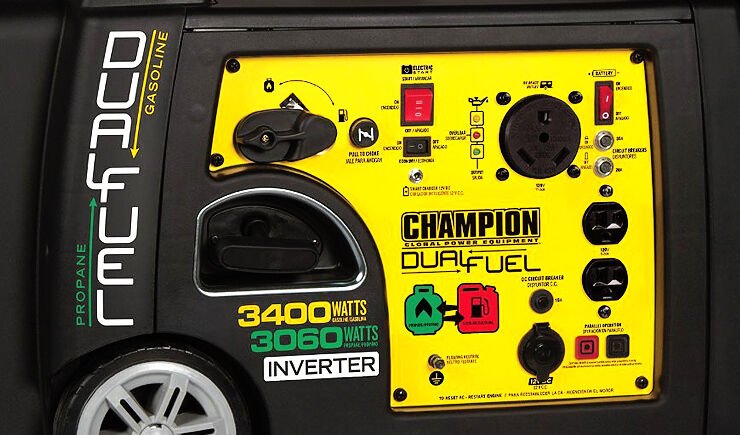
- Pros: The best of both worlds! Offers flexibility to switch fuel types based on availability or preference. You can use gasoline for maximum power and propane for extended, cleaner runtime.
- Cons: Generally more expensive than single-fuel models, slightly more complex mechanics.
While natural gas and diesel generators exist, they are typically found in larger, traditional portable or standby units. For the compact, efficient nature of inverter generators, gasoline and propane (or a combination) are the standard.
Portability & Practicality: Sizing Up Your Inverter
One of the defining characteristics of inverter generators is their excellent portability. They are significantly lighter and more compact than traditional generators of similar wattage.
- Weight & Size: Inverter generators typically weigh between 30 and 60 pounds, making them manageable for one person to lift and move. Their smaller footprint means they take up less space in an RV, car trunk, or garage.
- Application:
- Camping/Tailgating: The quiet operation is paramount here. You don't want to drown out nature or annoy your neighbors. Smaller units (1,000-2,500 watts) are perfect.
- RV Life: Powering RV appliances, especially air conditioners, requires more juice. Look for units in the 3,000-4,500 watt range, or models with parallel capability.
- Emergency Home Backup: For essential appliances, a 3,000-5,000 watt inverter generator can be a lifesaver. Their quiet nature also makes them more neighbor-friendly in residential areas during an outage.
- Light Work Sites: Powering a few tools where quiet operation is a bonus.
The design of inverter generators often includes convenient features like built-in handles or wheels, further enhancing their user-friendliness.
Smart Features That Make a Difference
Beyond raw power, modern inverter generators come packed with features designed for convenience, safety, and longevity. Don't overlook these when making your decision:
- Automatic CO Shutoff: This is a critical safety feature. Generators produce carbon monoxide (CO), a colorless, odorless, and lethal gas. An automatic CO shutoff system detects dangerous levels of CO and automatically shuts down the generator, potentially saving lives. Many regions now mandate this feature.
- Electric Start: Say goodbye to wrestling with a pull cord. Electric start, often activated by a button or even a remote control, makes firing up your generator effortless. Look for models that also include a recoil start as a backup, just in case the battery dies.
- Low-Oil Shutoff: Your generator's engine is its heart. This feature automatically shuts down the engine if oil levels drop too low, preventing costly damage. It's a non-negotiable for engine longevity.
- Fuel Gauge: A simple but incredibly useful feature, allowing you to monitor fuel levels at a glance and anticipate when you'll need to refuel.
- Economy Mode (or Eco-Throttle): This is a core inverter generator feature that allows the engine to adjust its speed to the load, as discussed. Ensure your chosen model has this to maximize fuel efficiency and minimize noise.
- Parallel Capability: Want more power without buying a larger, heavier generator? Many inverter generators can be linked together (paralleled) with a special kit to double their power output. This is fantastic for RVs needing to run an AC unit or for expanded home backup, giving you modular power on demand.
- USB Ports: A small but handy feature for directly charging phones, tablets, or other small USB-powered devices without needing a separate adapter.
Connecting Your Powerhouse: Beyond Extension Cords
While a portable inverter generator is, well, portable, how you connect it to your home's electrical system makes a huge difference in safety and functionality.
For general use like camping or powering tools, heavy-duty, outdoor-rated extension cords are perfectly acceptable. Always ensure the cord's gauge (thickness) and length are appropriate for the wattage you're drawing to prevent overheating and power loss. Never run extension cords through windows or doors where they can be pinched or become trip hazards.
For home backup, however, relying solely on extension cords is less versatile and can be hazardous. This is where a transfer switch becomes essential.
Understanding Transfer Switches
A transfer switch is a critical safety device that safely connects your generator to your home's electrical panel. It allows you to switch your home's power source from the utility grid to your generator, isolating your house from the grid. This is vital for two reasons:
- Preventing Backfeeding: Without a transfer switch, connecting a generator directly to your home's wiring (e.g., via a "suicide cord") can send electricity back into the utility lines. This is incredibly dangerous for utility workers trying to restore power and can cause severe injury or death. It's also illegal.
- Convenience and Safety: A transfer switch allows you to power specific circuits (like your refrigerator, furnace, or lights) in your home directly from the generator, without running numerous extension cords through the house.
- Manual Transfer Switches: These require you to manually flip a switch to disconnect from the utility and connect to the generator. They are typically installed by a licensed electrician and are a popular choice for portable generators used for home backup.
- Automatic Transfer Switches (ATS): More common with standby generators, an ATS automatically detects a power outage, starts the generator, and switches your home's power source without any manual intervention. While less common for inverter generators due to their lower typical wattage, some higher-capacity inverter setups can be integrated with manual transfer switches.
Remember: If you plan to connect your inverter generator to your home's electrical system, professional installation of a transfer switch is mandatory and may require permits.
Regarding power type, almost all household appliances use AC (alternating current). Inverter generators output AC power, making them directly compatible with your home's needs. DC (direct current) power is typically found in batteries and low-voltage applications.
Budgeting for Backup: What to Expect to Pay
Inverter generators, with their advanced technology, generally come with a higher price tag than their traditional portable counterparts. However, the benefits in terms of quiet operation, fuel efficiency, and clean power often justify the investment.
- Under $500: You'll find very small, low-wattage inverter generators (around 1,000-1,500 watts) in this range. These are best for basic camping needs, charging devices, or powering a few lights.
- $500 - $1,500: This is the sweet spot for many users. Here you'll find quality inverter generators ranging from 2,000 to 3,500 watts, perfect for RVs, tailgating, and essential home backup. Many dual-fuel options begin to appear here.
- $1,500 - $2,500+: This category includes higher-capacity inverter generators (4,000-7,000+ watts) and premium models from top brands. These are suitable for powering more extensive RV setups, multiple essential home circuits, or light job site use. You'll also find advanced features like electric start, parallel capability, and robust builds.
Actionable Insight: Beyond the initial purchase price, factor in fuel costs, which can add up, especially if using gasoline over extended periods. Also, consider the cost of accessories like parallel kits, quality extension cords, and professional installation of a transfer switch if you plan on home integration. While standby generator installation can start around $3,000, inverter generators connected via a manual transfer switch will have significantly lower installation costs, usually in the hundreds of dollars for the switch and electrician's labor.
Guardian of Your Investment: Essential Maintenance & Safety
An inverter generator is a significant investment, and like any engine-driven equipment, it requires proper care and diligent safety practices to ensure longevity and safe operation.
Crucial Maintenance Tips:
- Read the Manual: This cannot be stressed enough. Your owner's manual contains specific maintenance schedules and instructions for your model.
- Regular Oil Changes: Typically, change the oil every 50-100 hours of operation, or at least once a year, even if you haven't hit the hour mark. Clean oil is the lifeblood of your engine.
- "Exercise" Your Generator: Run your inverter generator for 15-30 minutes monthly, especially if it's stored for long periods. This keeps fuel circulating, lubricates internal components, and prevents seals from drying out. Use it under a light load (e.g., plug in a lamp) if possible.
- Fuel Stabilization: If you store gasoline for more than a month, use a fuel stabilizer to prevent it from degrading and gumming up the carburetor. For very long-term storage (several months or more), it's best to drain the fuel completely or run the generator until the fuel tank is empty and the carburetor is dry. Propane does not degrade.
- Inspect and Clean/Replace Filters: Periodically check the air filter for dirt and debris, and clean or replace it as needed. Some models also have a fuel filter that may need inspection or replacement.
- Spark Plug Check: Inspect the spark plug annually. Clean any carbon buildup or replace it if it's worn.
Non-Negotiable Safety Precautions:
- Outdoors ONLY: Generators produce carbon monoxide (CO), an invisible, odorless, and deadly gas. ALWAYS run your generator outdoors, in a well-ventilated area, at least 20 feet away from your home or any openings like windows and doors. Ensure the exhaust is directed away from occupied buildings.
- Install CO Detectors: Supplement outdoor placement with carbon monoxide detectors inside your home, especially if you're using a generator for backup power.
- Never Overload: Do not exceed your generator's rated wattage. Overloading can damage the generator and connected appliances, and pose a fire risk.
- Safe Fuel Storage: Store fuel in approved containers, in a cool, dry, well-ventilated area, away from living spaces and direct sunlight. Keep it away from ignition sources.
- Cool Before Refueling: Always turn off the generator and allow it to cool down completely before attempting to refuel. Spilled fuel on a hot engine can ignite.
- Proper Extension Cords: Use heavy-duty, outdoor-rated extension cords (12-gauge or thicker for most applications) that are rated for the wattage you are drawing. Inspect cords for damage before each use.
- Dry Conditions: Never operate a generator in rain, snow, or wet conditions unless it is specifically designed with weather protection.
Choosing Wisely: Brands and Beyond
The market for inverter generators is competitive, with many reputable brands offering quality products. While individual models vary, some brands consistently receive high marks for durability, reliability, and customer support.
Leading manufacturers often include Honda, Generac, Champion, Westinghouse, and EcoFlow (known for solar generators that often incorporate inverter tech). Researching specific models from these brands and others will give you a good starting point.
When reviewing different options, dive into user reviews. Pay attention to comments regarding:
- Noise Levels: Do real users find it as quiet as advertised?
- Fuel Efficiency: How long does it run on a tank under typical loads?
- Ease of Use: Is it simple to start, operate, and maintain?
- Durability: How well does it hold up over time and in various conditions?
- Customer Support: Is the manufacturer responsive and helpful if issues arise?
For an in-depth look at top performers and detailed comparisons, check out our guide to the best inverter generators currently available. Comparing different models side-by-side will help you pinpoint the features and performance that align best with your priorities.
Your Power-Packed Future Starts Now
Choosing the right inverter generator can feel like a big decision, but by following a structured approach, you'll gain clarity and confidence. Start by accurately calculating your power needs, consider your fuel preferences, prioritize essential features like safety shutoffs and electric start, and factor in how portability and noise levels fit into your lifestyle.
An inverter generator isn't just about electricity; it's about peace of mind, uninterrupted comfort, and the freedom to power your adventures or safeguard your home. With this comprehensive guide, you're now equipped with the knowledge to select the perfect inverter generator to meet your needs and keep your world running smoothly, even when the grid can't.